
Turn down the noise, not the world.
THE SCIENCE OF BETTER HEARING
We often think about hearing protection in surprisingly simple terms: the more sound we block, the better protected we are.
But hearing preservation is more intelligent than that.
In a recent feature for The Independent, exploring the best earplugs for live music - and how the right hearing protection can help reduce the risk of tinnitus and noise-induced hearing loss - our Senior Audiologist and Managing Director Adam Shulberg described noise as a dose.
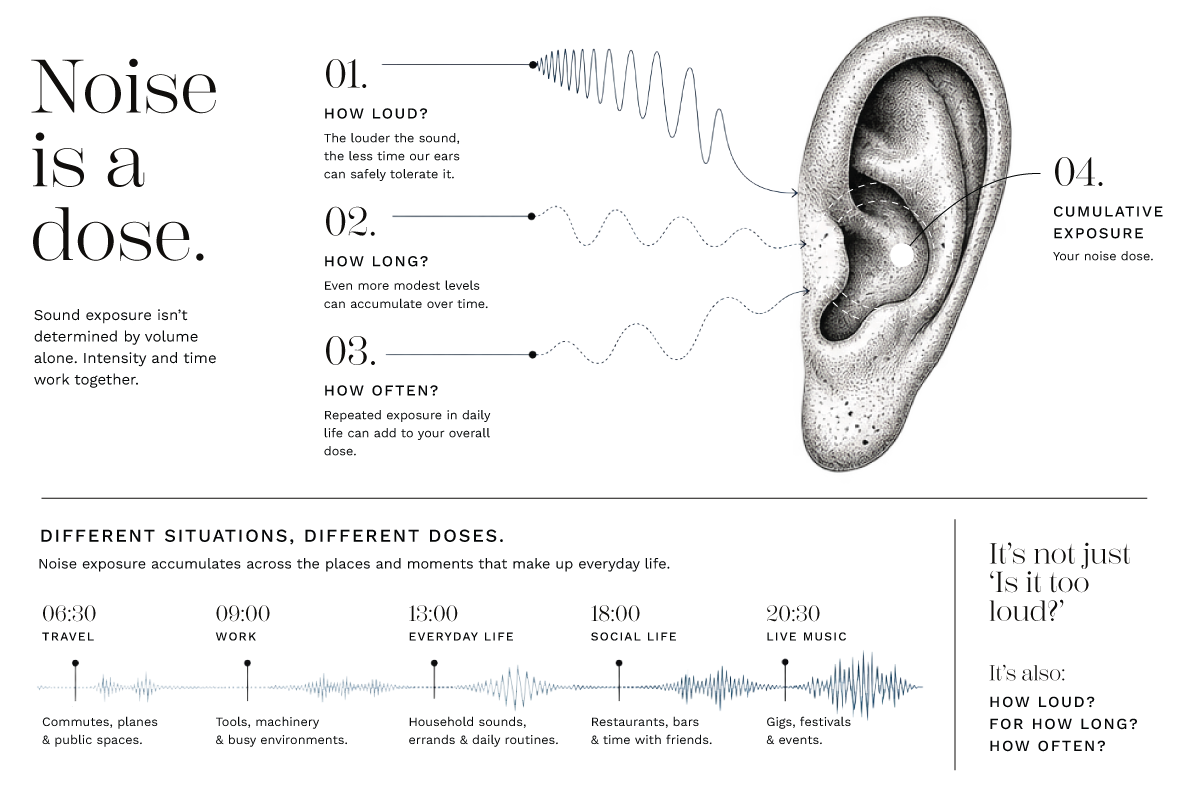
It’s a useful way to think about hearing preservation because sound exposure isn’t determined by volume alone. Intensity and time work together.
Of course, sometimes the dose can be sudden - a single exposure to an extremely intense sound can be enough to damage hearing.
But more often, potentially harmful exposure builds cumulatively. It doesn’t have to come from one extraordinarily loud event. Repeated exposure to elevated sound levels in daily life - across a journey, a working day, a concert, or simply through repeated exposure - can add to our overall sound dose.
And critically, the louder the sound, the less time our ears can safely tolerate it. As sound level increases, the amount of exposure time before reaching an equivalent dose falls rapidly.
So protecting hearing isn’t simply about asking, “Is this too loud?” It’s also about asking, “How loud, for how long, and how often?”
The answer isn’t necessarily to shut the world out.
It is to manage the dose intelligently - reducing exposure while preserving as much of the sound you actually want and need to hear as possible.
At a live music event, for example, filtered hearing protection can reduce sound levels while retaining much more of the integrity of the music. And the appropriate level of attenuation depends upon the environment: the protection required close to the speakers at a loud concert may be very different from that required at a quieter outdoor performance.
Fit matters too.
Off-the-shelf protection can be extremely effective - which is why we chose to stock Happy Ears.
The Independent rated Happy Ears its best option for very high protection, highlighting the significant reduction in noise, secure fit and lasting comfort.
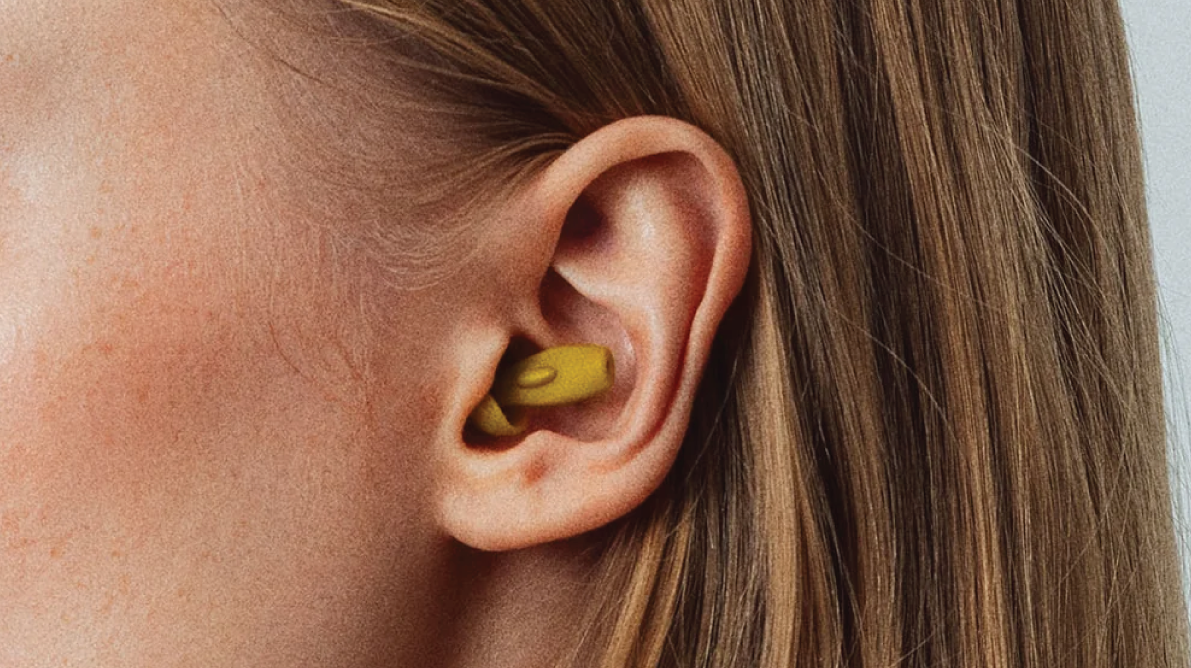
For a ready-to-wear earplug, that combination matters. Effective protection is only useful if people are willing to wear it - and Happy Ears offers a discreet, reusable and eco-conscious option that reduces sound meaningfully without unnecessarily disconnecting you from the experience around you.
Available in three sizes - Small, Medium and Large - the Happy Ears Discovery Pack includes all three, allowing you to find the most comfortable and secure fit for your ears.
As with any universal-fit earplug, however, performance still depends upon choosing the most appropriate size and achieving an effective seal.
For those who want the highest level of protection, comfort and personalisation, while preserving the quality and integrity of the sound they still want to hear, custom-fit hearing protection takes this further.
Made around the individual ear, custom protection allows both fit and attenuation to be selected around your hearing, your sound exposure, the environment you are in and what you still need to hear - whether that is music, speech, colleagues, environmental information or the wider soundscape around you.
And importantly, no earplug should be regarded as permission for unlimited exposure.
Hearing protection reduces the dose. It doesn’t make the dose irrelevant.
Sometimes, hearing well begins with choosing what not to hear.
PERSONALISED AROUND YOU
Explore custom-fit hearing protection tailored to your ears, your sound exposure and the way you listen.
Explore Ready-To-Wear protection we rate
READ ADAM SHULBERG IN THE INDEPENDENT
Our Senior Audiologist discusses noise exposure, hearing protection and reducing the risk of noise-induced hearing loss.
